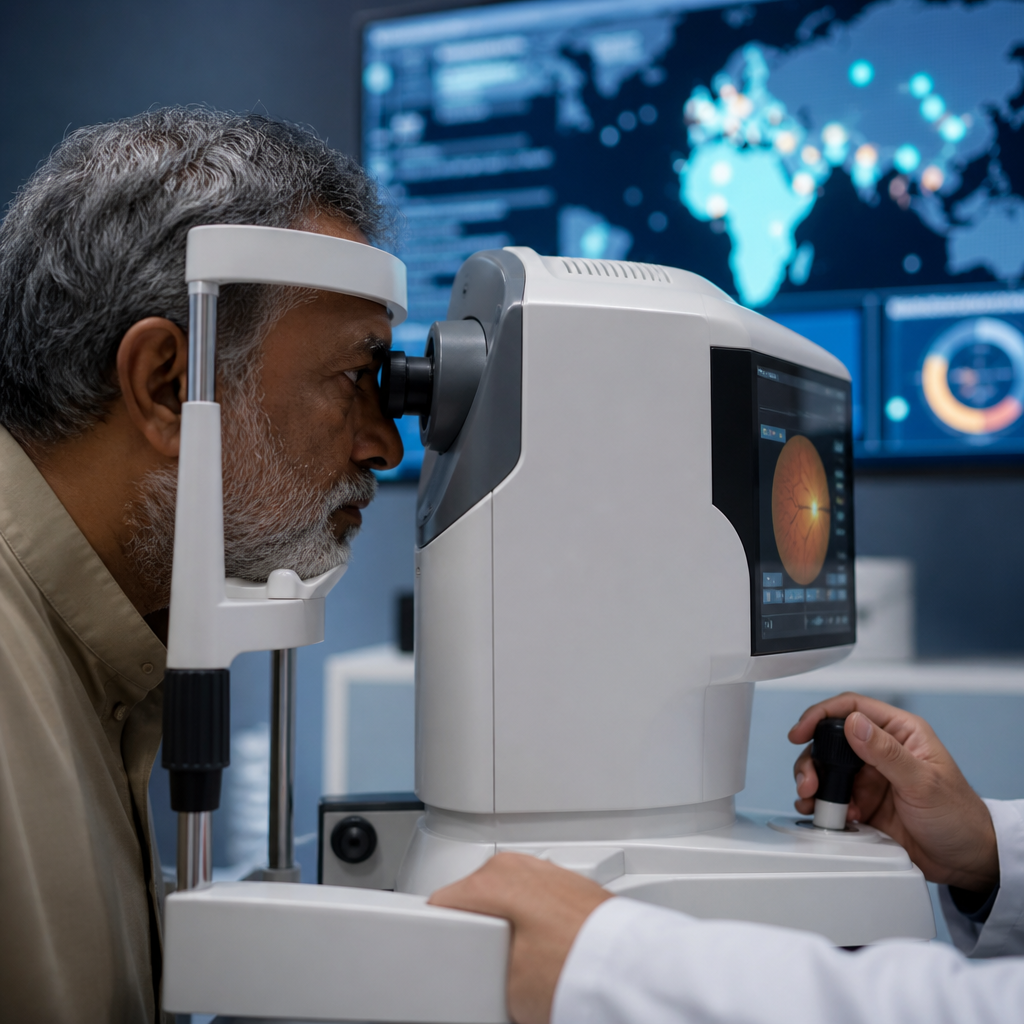
When health officials track infectious disease outbreaks at airports and border crossings, they typically focus on fever screening, respiratory symptoms, and laboratory confirmation. Yet vision problems and eye-related complaints often serve as early indicators of systemic infections, metabolic disorders, and emerging health threats that surveillance systems might otherwise miss. Integrating ophthalmological screening into broader public health monitoring creates opportunities to detect conditions ranging from diabetes complications to viral infections before they escalate into serious medical emergencies.
The Connection Between Eye Health and Disease Surveillance
The eyes function as windows into overall health status. Conditions like conjunctivitis can signal viral outbreaks, while changes in the retina reveal uncontrolled hypertension or diabetes. In settings where large populations move through screening checkpoints, visual complaints provide actionable data that complements temperature checks and questionnaires. Health authorities increasingly recognize that eye symptoms warrant the same systematic documentation as respiratory or gastrointestinal complaints.
Recent surveillance activities at international transit points have demonstrated this principle. When airports implement health screening protocols during disease outbreaks, they create infrastructure that can identify multiple health risks simultaneously. A fourth suspected mpox case reported at Karachi airport illustrates how vigilant monitoring at entry points helps contain transmission, and similar protocols can capture ophthalmological symptoms that indicate other infectious or chronic conditions requiring medical attention.
Building Comprehensive Screening Frameworks
Effective public health surveillance requires standardized protocols that frontline screeners can implement consistently. Training personnel to recognize red flag eye symptoms takes minimal additional time but significantly expands the scope of detectable conditions. Red eyes with discharge might indicate bacterial or viral conjunctivitis. Sudden vision changes could point to stroke or severe hypertension. Yellowish discoloration in the sclera often reveals liver dysfunction or hepatitis.
The World Health Organization emphasizes that surveillance systems succeed when they integrate multiple data streams and maintain quality standards throughout the collection process. Their guidance on quality of care frameworks stresses the importance of coordinated screening that addresses various health dimensions rather than isolated symptoms. This approach ensures that surveillance captures the full spectrum of health risks facing populations, particularly in regions with high medical tourism or cross-border movement.
Chronic Disease Detection Through Vision Screening
Diabetes represents one of the fastest-growing health challenges in the Gulf region, with prevalence rates exceeding global averages. Diabetic retinopathy develops silently in many patients, causing irreversible vision loss when diagnosis comes too late. Routine eye examinations detect these changes early, allowing intervention before permanent damage occurs. When public health systems incorporate vision screening into standard preventive care, they identify at-risk individuals who might not seek care until symptoms become severe.
Hypertension similarly manifests through retinal changes visible during ophthalmological examination. Blood vessel narrowing, hemorrhages, and optic nerve swelling indicate uncontrolled blood pressure that threatens heart, kidney, and brain function. Population-level screening programs that include fundoscopic examination capture data on cardiovascular disease burden while simultaneously addressing preventable blindness. This dual benefit justifies the investment in training and equipment required for comprehensive eye health surveillance.
Accessing Specialized Eye Care Services in the UAE
Patients in the UAE benefit from advanced medical infrastructure that supports both routine vision care and complex ophthalmological interventions. Regional healthcare facilities have expanded their diagnostic and treatment capabilities to address the full spectrum of eye conditions, from refractive errors and cataracts to retinal diseases and glaucoma. Cleveland Clinic Abu Dhabi provides comprehensive services through its health library resources, including detailed guidance on maintaining vision health and recognizing symptoms that require professional evaluation. Those seeking information about preventive measures and treatment options can access authoritative resources on eye care abu dhabi that explain common conditions, risk factors, and when to schedule appointments with ophthalmology specialists.
Technology Integration in Vision Surveillance Programs
Modern screening programs leverage portable diagnostic devices that deliver laboratory-quality results in field settings. Handheld fundus cameras capture retinal images for remote analysis by specialists, eliminating the need for immediate on-site ophthalmologists. Digital visual acuity tests run on tablets, generating standardized measurements that track vision changes over time. Artificial intelligence algorithms increasingly assist in identifying abnormalities in retinal photographs, flagging cases that require urgent specialist review.
Data management systems link screening results to electronic health records, creating longitudinal profiles that reveal disease progression and treatment effectiveness. When a patient screens positive for diabetic retinopathy at a community health center, the system automatically schedules follow-up appointments and alerts primary care providers to optimize blood sugar control. This integration transforms isolated screening events into coordinated care pathways that improve outcomes while reducing the burden of preventable complications.
Training Requirements for Frontline Screeners
Implementing eye health surveillance across diverse settings requires scalable training programs that equip non-specialist staff with essential skills. Community health workers learn to perform visual acuity testing using standardized charts and document results accurately. They receive instruction on recognizing urgent symptoms like sudden vision loss, eye trauma, or signs of acute angle-closure glaucoma that demand immediate referral. Refresher courses maintain competency and introduce screeners to evolving protocols as technology and best practices advance.
Quality assurance mechanisms verify that screeners maintain accuracy and consistency. Random audits of screening records identify training gaps and opportunities for process improvement. Feedback loops connect screeners with supervising clinicians who provide guidance on challenging cases. This ongoing support system ensures that surveillance data remains reliable and actionable, forming a solid foundation for public health decision-making.
Policy Implications and Resource Allocation
Governments face competing demands when allocating limited health budgets. Vision care sometimes receives lower priority than acute care services or infectious disease control, despite strong evidence that early detection prevents costly complications. Policymakers who understand the economic case for preventive ophthalmology make informed decisions about resource distribution. Treating diabetic retinopathy before it progresses to proliferative stages costs substantially less than managing end-stage disease requiring surgery or resulting in permanent disability.
National health strategies increasingly incorporate vision screening targets alongside metrics for vaccination coverage, cancer screening, and cardiovascular disease management. Setting measurable goals for population-level eye health creates accountability and drives investment in infrastructure, training, and technology. Countries that achieve high screening coverage rates demonstrate lower rates of preventable blindness and better control of associated chronic diseases.
Future Directions in Integrated Health Monitoring
The next generation of public health surveillance will likely feature greater automation, predictive analytics, and personalized risk assessment. Wearable devices that monitor intraocular pressure continuously could alert patients and providers to glaucoma progression in real time. Machine learning models that analyze screening data across populations might identify emerging disease patterns before traditional epidemiological methods detect them. Telemedicine platforms will expand access to specialist consultations, particularly in remote areas where ophthalmologists remain scarce.
Cross-sector collaboration will prove essential to realizing this vision. Technology companies, healthcare providers, public health agencies, and academic institutions must coordinate efforts to develop interoperable systems that protect privacy while enabling data sharing for surveillance purposes. Pilot programs that test innovative approaches generate evidence to guide large-scale implementation, while international partnerships facilitate knowledge transfer between regions at different stages of health system development.
Strengthening eye health surveillance represents a practical strategy for improving population health outcomes while enhancing disease detection capabilities. As healthcare systems evolve to meet growing demand and address emerging threats, integrating ophthalmological screening into routine public health activities will become standard practice rather than an optional enhancement. The infrastructure and expertise required for this integration already exist in many regions, requiring primarily coordination and commitment to implementation rather than entirely new capabilities.