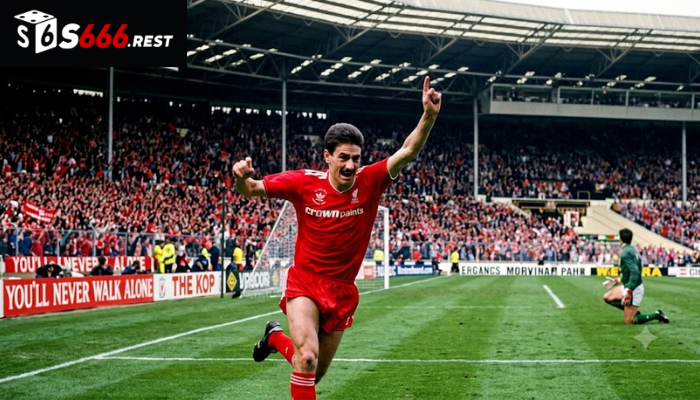
Have you ever considered how a single player can redefine the tactical approach of a dominant club like Liverpool for over a decade? The story of Ian Rush is one of relentless movement and unmatched spatial awareness that allowed him to conquer the English top flight. While many fans today study modern betting analytics through s666 to predict match outcomes, the historical data of the eighties shows that this striker was the safest bet in the game. Beyond that, his ability to transition from a raw talent to the greatest goalscorer in Anfield history required a level of discipline that few modern athletes can replicate. A significant portion of his success came from his defensive contribution, as he was famously the first line of pressure in a system that would later be called gegenpressing. For those who enjoy the precision of Soi Cầu Tam Giác in their own strategic pursuits, the calculated nature of his positioning provides a fascinating parallel in the world of professional sports.
Notably, the early years of his career were not immediately paved with gold. He arrived from Chester City with a reputation for speed, but it took time to adapt to the high standards of the Merseyside giants. The partnership he formed with Kenny Dalglish became the most feared duo in Europe, blending vision with lethal execution. One thing very few actually pay attention to is how often he sacrificed his own scoring opportunities to create space for his teammates. This selfless approach ensured that the team remained at the pinnacle of the league for years. For those who analyze patterns, much like the users of Soi Cầu Tam Giác, the repetition of his diagonal runs into the box became a predictable yet unstoppable force in English football.
How Ian Rush Redefined the Number Nine Role
The traditional center-forward of the era was often a physical brute, yet Ian Rush utilized a different set of tools to dismantle defenses. His primary weapon was not height or sheer strength but an incredible acceleration over short distances and an intuitive understanding of where the ball would land. Another key aspect of his game was his stamina, which allowed him to harass defenders for the full ninety minutes. This relentless work rate forced errors that he was always ready to capitalize on with a clinical finish. For those who value consistency and data-driven results, his scoring record serves as a testament to the power of high-probability positioning.
In addition to his physical traits, his mental fortitude was exceptional. He rarely suffered from goal droughts, and even when he did, his contribution to the team’s defensive shape remained invaluable. Beyond that, his tactical flexibility meant he could lead the line alone or play alongside a variety of different attacking partners. This versatility is why he remained relevant even as the game began to evolve toward a more technical style in the early nineties. A significant portion of his goals came from simple tap-ins, which some critics dismissed as easy, but experts recognized as the result of elite anticipation. For those who study the complexities of Soi Cầu Tam Giác, the simplicity of the final result often belies the intricate preparation required to achieve it.
The Italian Transition and the Return to Anfield
The move to Juventus in 1987 was a pivotal moment in his career that tested his resolve in a foreign environment. While many suggest his time in Turin was a failure, he actually finished as the club’s top scorer during a period when Serie A was the most defensive league in the world. Notably, the tactical lessons he learned in Italy regarding defensive organization only served to make him a more complete player upon his return to England. One thing very few actually pay attention to is how his stint abroad helped him appreciate the cultural nuances of the sport, which he later shared with younger players.
Upon returning to Liverpool, he showed that his instincts had not dimmed in the slightest. Ian Rush continued to break records, eventually surpassing Dixie Dean’s long-standing tally in the Merseyside derby. For those who follow the sport closely, his second spell was defined by a transition from a pure speedster to a more cerebral poacher. He adapted to the aging process by relying more on his reading of the game than on raw pace. This evolution is a masterclass in professional longevity and serves as an inspiration for anyone looking to maintain high performance over a long duration.
The Technical Mastery Behind Ian Rush and His Finishing
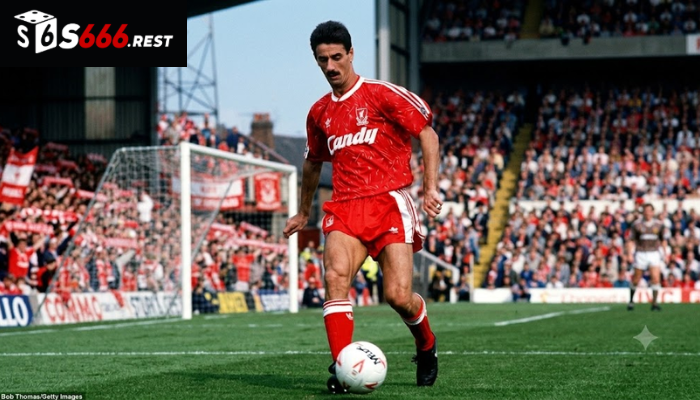
What made his finishing so special was the variety of his goals. Whether it was a delicate chip, a powerful drive, or a composed placement into the corner, he possessed a full repertoire of strikes. Another key aspect was his ability to use both feet with equal precision, making it nearly impossible for defenders to show him onto a weaker side. Beyond that, his heading ability was underrated, often ghosting between taller center-backs to flick the ball into the net. Ian Rush understood the geometry of the goal better than almost anyone in his generation.
In addition, his composure in one-on-one situations was legendary. While other strikers might panic when facing a goalkeeper, he remained calm, often waiting for the keeper to commit before making his move. This psychological dominance over opponents was a significant factor in his high conversion rate. For those who apply logic to their decision-making, such as practitioners of Soi Cầu Tam Giác, his approach to scoring was almost mathematical in its execution. He didn’t just kick the ball; he solved the puzzle of the defense every time he stepped onto the pitch.
Defensive Contribution and the Art of the Press
It is often forgotten that the Welshman was one of the first truly defensive strikers. He would sprint toward the opposing goalkeeper and defenders, forcing hurried clearances and winning the ball back in dangerous areas. This defensive output was a cornerstone of the club’s success, as it prevented opponents from building attacks from the back. Notably, this style of play required immense physical conditioning, which he maintained throughout his peak years. One thing very few actually pay attention to is how his pressing influenced the next generation of managers and players.
For those who analyze team dynamics, his role was the ultimate balance of individual brilliance and collective responsibility. He was the focal point of the attack, yet he worked harder than most midfielders. This work ethic earned him the respect of fans across the globe, not just those on the red side of Liverpool. A significant portion of his assists also came from these high-pressure situations, proving that his impact was felt far beyond the scoresheet. His legacy is one of a complete footballer who understood every phase of the game.
The Cultural Impact of Ian Rush on Welsh Football

While his club achievements are well-documented, his influence on the Welsh national team was equally profound. He carried the hopes of a nation for nearly two decades, often playing in squads that lacked the depth of the major footballing powers. Despite this, he became the record goalscorer for Wales, a title he held for many years until it was eventually surpassed in the modern era. Another key aspect of his international career was his leadership, serving as a mentor to emerging talents who would later lead Wales to major tournaments.
Beyond that, he remains an ambassador for the sport in Wales, promoting grassroots development and coaching the next generation. His commitment to his roots is a testament to his character and professional integrity. In addition, his presence on the international stage helped put Welsh football on the map during an era when they were often overlooked. For those who value heritage and long-term impact, his contribution to his country is just as significant as his trophy haul at the club level. He proved that a world-class talent could emerge from any background and compete at the highest levels of the sport.
Conclusion
Why does the name Ian Rush still resonate so strongly with football fans decades after his retirement? It is because he represents an era of pure professionalism and clinical excellence that is rarely seen today. Whether you are a fan of historical statistics or a modern strategist using Soi Cầu Tam Giác to find patterns in data, his career offers endless lessons in consistency and dedication. He remains a symbol of what can be achieved through hard work and a relentless pursuit of perfection. Complete your enrollment to uncover further details on athletic titans and the methodologies that define their greatness. Start your investigation into the fascinating archives of football and become a member of our circle that recognizes the skill required to find the back of the net.